
Not all tokens labeled as “Real-World Assets” (RWAs) are created equal. The term RWA has become a hot buzzword in crypto, promising to bridge physical assets with blockchain. Yet the space is rife with confusion, as projects stretch the definition to fit anything remotely tied to a real-world metric. Hype is high – tokenization of RWAs is touted as a hundreds-of-trillions opportunity – but misunderstandings about what backs these tokens are widespread. This confusion isn’t just semantic; it can lead to misplaced trust and risky investments. Precise definitions matter because a token is only as good as the asset and rights behind it. As one industry expert noted, many crypto tokens are driven by “hype, marketing or memes rather than real fundamentals,” so trust “depends entirely on how the product is structured and how transparent and regulated the issuer is”. In other words, calling something an RWA doesn’t make it so – the substance must match the name.
Setting the Record Straight: What Is a Real-World Asset Token?
At its core, a real-world asset token is a digital token representing a tangible or financial asset in the physical world. In theory, this could be anything from a bar of gold or a piece of fine art to shares in a company or acres of land. Tokenization simply means a blockchain token stands in for ownership of that asset, allowing it to be traded or managed digitally. However, in practice, truly deserving the RWA label requires more than just referencing a real-world item. It requires meeting a high standard of authenticity and trust.
Let’s cut through the noise by establishing a three-part standard for what truly qualifies as an RWA in the tokenized economy. Think of these three requirements as the three corners of a triangle – asset, rights, and records – holding up the token’s value. Remove any one corner, and the whole structure collapses.
The Three Cornerstones of a True RWA Token
We propose a simple three-part test for any RWA token project. If a token meets all three criteria, it’s likely a real deal; if not, you should raise an eyebrow:
- Tangible, Identifiable Asset: There must be a real asset behind the token. The asset could be physical (like a commodity, property, or artwork) or a financial instrument (like a bond or invoice), but it must exist in the real world and be specifically identifiable – something you could point to or describe in detail. If each token corresponds to one ounce of gold, there should be actual gold bars (with serial numbers) in a vault. If it’s shares in a property, that property must be real and maybe even tied to a deed or legal description. No asset = no RWA, plain and simple. In short, if the underlying thing isn’t actually there, the token is just an empty shell pretending to be an asset-backed coin.
- Legally Enforceable Rights for Token Holders: Owning the token should give you genuine ownership or claim to the asset. This means the project has put in place the legal frameworks or contracts so that token holders have a binding claim on the underlying asset – one that could stand up in a court if needed. As experts emphasize, the foundation of RWA value is legal, not just code. For example, holding a token might entitle you to redeem it for the asset (e.g. get delivered the gold or painting), or to a share of income from it (rent from real estate, yields from a bond). If those rights aren’t clearly defined and enforceable, you’re not really an owner – you’re just holding a promise. A hard question to ask is: “If the company or issuer disappeared, do I still have a claim on the asset?” If the answer is no (or unclear), the token fails this test. Remember, owning a “tokenized stock” isn’t the same as owning the actual stock if you get no voting rights, dividends, or redemption ability. True RWAs grant you the same economic rights as holding the asset outright.
- Verifiable, Auditable Link Between Token and Asset: Don’t trust – verify. A legitimate RWA token will provide a transparent, auditable record linking each token to its corresponding asset. Ideally, this means on-chain proof combined with third-party audits or oracles. The blockchain ledger itself should show how tokens map to assets (or to an entity holding the assets for you), and independent auditors should regularly confirm that the assets are indeed in place, matching the tokens one-for-one[7]. In other words, there’s proof of reserves. Anyone should be able to scrutinize the records (public blockchain data, audit reports, etc.) and see that, for example, 10,000 tokens are backed by 10,000 barrels of oil stored in a verified facility. Transparency is non-negotiable here – if you have to simply take the issuer’s word for it, that’s a red flag. Reputable projects will even publish audit reports for public review[8], or use on-chain proof-of-reserve mechanisms, so that the token-to-asset linkage is continually validated. This criterion is like the glue of our triangle: it binds the legal rights to the real asset in a way that anyone can check.
These three cornerstones – a real asset, legal rights, and verified records – form the “triangle” of trust for RWA tokens. When all three are in place, you have a sturdy structure: a token that actually means something in the real world. If one is missing, the whole proposition wobbles or collapses. For instance, without legal rights, you just have an informal IOU; without an asset, you have a deceptive fiction; without verification, you have to trust blindly.
What RWAs Are Not: Common Misuses of the Label
With the above standard in mind, it becomes easier to spot which so-called RWAs are pretenders. Unfortunately, in the current market some projects slap the RWA label on tokens that don’t truly meet the criteria. Here are a few common misuses of the RWA label:
- Synthetic Tokens without Real Backing: These tokens might track the price of an asset, but they aren’t actually backed by one in custody. For example, an algorithmic token could mirror the price of gold or a stock via smart contracts or collateralized debt, yet no gold bar or share is being held for you. It’s essentially a derivative or a contract-for-difference. You get price exposure without ownership – a “mirrored” asset in DeFi jargon. While there’s nothing inherently wrong with synthetic assets for trading purposes, calling them real world assets is misleading. They fail the asset and rights tests: you can’t redeem a synthetic Tesla token for an actual Tesla share, nor claim dividends. It’s like wagering on a horse instead of owning the horse – if the race organizer disappears, your bet slips are worthless.
- Future Promises Instead of Present Assets: Some tokens are sold on the idea that one day they’ll be backed by real assets or cash flows, but at present they’re not. For instance, a project might raise funds with a token that will correspond to a real estate development or a mine once it’s operational. Until that happens (if it ever happens), the token is effectively unsecured. This is more of a speculative investment in a project’s success than a claim on a current asset. It might be packaged as an “RWA” because it plans to involve real assets, but it hasn’t actually crossed that bridge yet. These future-asset tokens are high risk: you’re relying entirely on the team’s promise and execution. They don’t meet our tangible asset criterion today, so be wary. A real RWA has the asset backing it from day one, not a maybe-someday storyline.
- Price-Feed Tokens with No Custody or Claim: This misuse is a bit like the synthetic category, but worth calling out. Here a token’s value might be pegged to an external asset’s price (via an oracle or price feed), giving the illusion of being “backed” by that asset. But if the issuer isn’t actually holding the asset or at least a contract to obtain it for you, then you as a token holder have no claim on anything but the price itself. A classic example would be a “stock token” that simply follows Apple stock’s market price. If you can’t redeem it for an actual Apple share or any cash equivalent, what you hold is basically an index or voucher that lives and dies by the issuer’s solvency and honesty. Many early “tokenized stock” offerings fell into this bucket – they gave access to price movements but “owning” them did not mean owning the actual stock or any rights to it (Reference 1, Reference 2). True RWA status requires that direct linkage; otherwise, the token is just a pricing instrument.
By recognizing these patterns, you can avoid falling for an “RWA” in name only. The litmus test is always to ask: Does this token give me a piece of a real, present asset with legal rights and verified proof? If any part of that answer is murky, the RWA label may be more marketing than reality.
RWA Evaluation Checklist: Spotting the Real vs. the Ruse
For investors and observers who want a quick way to vet a supposed real-world asset token, here’s a handy checklist. Use these questions as a guide whenever you come across an RWA claim:
- ✅ Is there a real asset in hand? – Confirm that the underlying asset exists now (not in the future) and is clearly identified. It could be a specific property, a certain amount of a commodity in storage, or a defined financial instrument. If the asset is vague or yet-to-be-acquired, that’s a red flag.
- ✅ Do you have legal ownership or rights? – Examine what rights the token confers. Is there a legal framework (like an SPV, trust, or contract) that says token holders own X asset or are entitled to Y proceeds? Can you redeem the token for the asset or otherwise enforce your claim? Enforceable commitments under recognized law are the foundation of trust here. If holding the token doesn’t actually give you a say or stake in the asset, it fails this check.
- ✅ Is there proof-of-backup and transparency? – Look for evidence that the token’s backing is verifiable. Reputable projects will publish audited reports or on-chain proof showing the reserves match the tokens in circulation[8]. You should ideally see things like proof-of-reserves, blockchain explorer addresses holding the asset, or third-party attestations. Lack of transparent proof means you’re being asked to trust blindly – never a good idea in crypto or finance.
- ✅ Who holds the asset, and is it secure? – Check if a trusted custodian or mechanism is in place for the asset. If it’s gold or cash, is it held in a regulated vault or bank? If it’s real estate, is there a deed held by a legal entity on behalf of investors? The quality of custody and audits matters[7] – it’s the difference between a token truly backed by vaults of gold versus one that claims to be but can’t prove it. Also consider regulatory compliance: serious RWA projects usually work within legal frameworks rather than bypassing them entirely.
In summary, don’t be shy about asking tough questions. An honest RWA issuer should not only have good answers, they’ll likely volunteer this information upfront in whitepapers or websites. As the saying goes, “trust, but verify” – but in crypto we prefer “verify, so you can trust.”
Delivering the Gold Standard: How eSand Meets the RWA High Bar
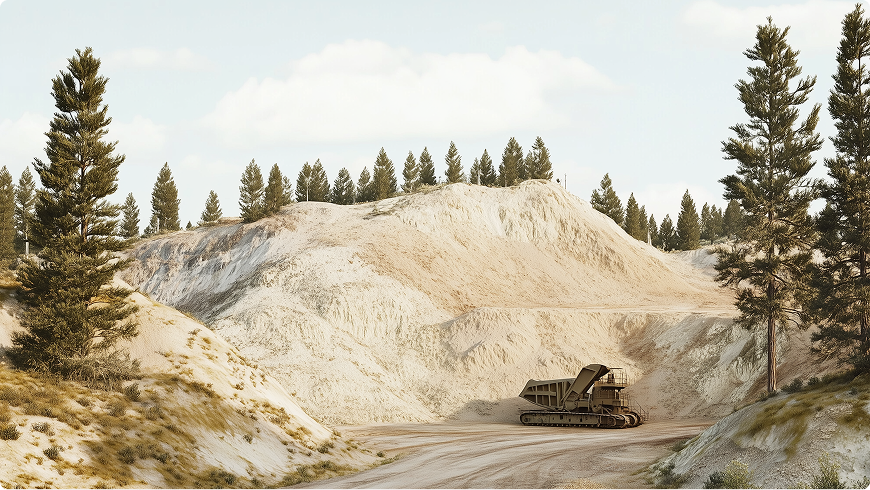
To see these principles in action, let’s look at eSand – a project that exemplifies substance over hype in the RWA arena. eSand is a token that is literally backed by sand (yes, sand!). More specifically, each eSand token is backed by one metric ton of high-purity quartz sand from a verified physical reserve. This isn’t just any sandbox filler, but an ultra-pure quartz deposit used in high-end applications like fiber optics, solar panels, and microchips. In the tokenized economy, eSand stands out by actually tying digital tokens to a tangible commodity stockpile – fulfilling all three of our RWA criteria to a tee:
- Real Asset: eSand’s underlying asset is real, existing, and specific. The project has rights to a large quartz sand deposit (50 million tons in Romania) and has tokenized it in a one-to-one ratio. That means for every eSand token you buy, there is a ton of actual, mined sand allocated and stored under strict conditions for you. It’s not a vague promise or a derivative; it’s as concrete (pun intended) as it gets. You could visit the site or the storage facility and point to the literal mountains of sand backing the tokens.
- Legal Ownership Rights: When you hold eSand tokens, you literally own a piece of that reserve. The project’s legal structure ensures that token holders have entitlement to the underlying sand – essentially, the token is a digital title to the commodity. If needed, you could redeem or sell that right, just as if you owned a warehouse receipt for a commodity. eSand has put a lot of effort into compliance and proper custody arrangements, so that token holders are not just speculators but rightful owners of a valuable resource. This alignment with legal frameworks and investor rights is a cornerstone of eSand’s model, treating each token as a true claim check for a ton of high-grade sand.
- Verifiable and Transparent Link: eSand recognizes that trust comes from verification. The project maintains transparent audit trails and continuous monitoring of the sand reserves. They engage independent auditors to regularly check that the sand reserve is intact and matches the number of tokens – no magic printing of extra tokens, no missing inventory[7]. These audit reports are made available, and on the blockchain side, eSand’s token contracts are designed to reflect the state of the reserves (with oracles updating relevant data, such as sand market prices, to ensure everything stays aligned). In other words, anyone can audit the auditors and see that eSand’s 50 million tokens are backed by 50 million tons of verified sand. This level of openness is eSand’s way of saying: we have nothing to hide, and everything to prove. It cements confidence that each digital token is firmly tethered to real value in the ground.
Beyond meeting the basic RWA requirements, eSand embodies a philosophy that resonates with the values of discerning investors – those who appreciate scarcity, provenance, and proof. Much like a luxury asset (imagine a rare vintage wine or a limited-edition timepiece), eSand’s value proposition lies in its authenticity and exclusivity:
- Scarcity: The supply of eSand tokens is fixed by the finite nature of the underlying asset – only 50 million tokens for 50 million tons, ever. No one can dilute the supply or conjure more out of thin air, which creates a built-in scarcity akin to precious metals or other luxury commodities. This scarcity is not just artificial; it’s rooted in geological reality and careful project curation.
- Provenance: Every token is backed by quartz sand of exceptionally high purity, sourced from a specific deposit with documented characteristics. This is the equivalent of knowing the exact vineyard and vintage of a fine wine, or the mine from which a diamond was unearthed. eSand provides that provenance and transparency, so holders know exactly what they own and where it comes from. In an industry often plagued by opaque claims, eSand’s approach of tying tokens to a well-defined, ethically-managed resource is a breath of fresh air.
- Proof (Transparency): True to the blockchain ethos, eSand emphasizes proof over promises. From public reserve audits to on-chain tracking, the project doubles down on verifiability. It’s the digital asset world’s version of a certificate of authenticity and an appraisal rolled into one. By rigorously documenting and disclosing how each token correlates to stored sand (and even how that sand is safeguarded and periodically evaluated), eSand builds a foundation of trust that goes beyond marketing. This is a token you don’t have to take on faith – you can verify its backing any time, which is the ultimate confidence booster.
The end result is that eSand has positioned itself as a gold standard for RWA tokens, aligning itself with a “luxury” mindset of quality over hype. Rather than chase quick buzzwords, eSand focuses on substance: real assets, real value, real transparency. For high-net-worth individuals and crypto-curious investors alike, this approach is deeply reassuring. It means that investing in eSand isn’t about riding a fad; it’s about holding a token that stands on a foundation as solid as, well, rock (silicon dioxide rock, to be precise).
In conclusion, as the tokenized economy grows, discerning the real real-world assets from the imposters will be crucial. By understanding the triad of asset, rights, and records, investors can navigate the RWA landscape with confidence. Always remember to apply the three-part standard and the checklist – they will serve as your compass in a market where innovation sometimes outpaces clarity. Projects like eSand show that when done right, RWA tokens can combine the best of both worlds: the tangible security of physical assets and the efficiency and openness of blockchain. That’s a powerful combination – one built not on flashy hype, but on trust, transparency, and true value.